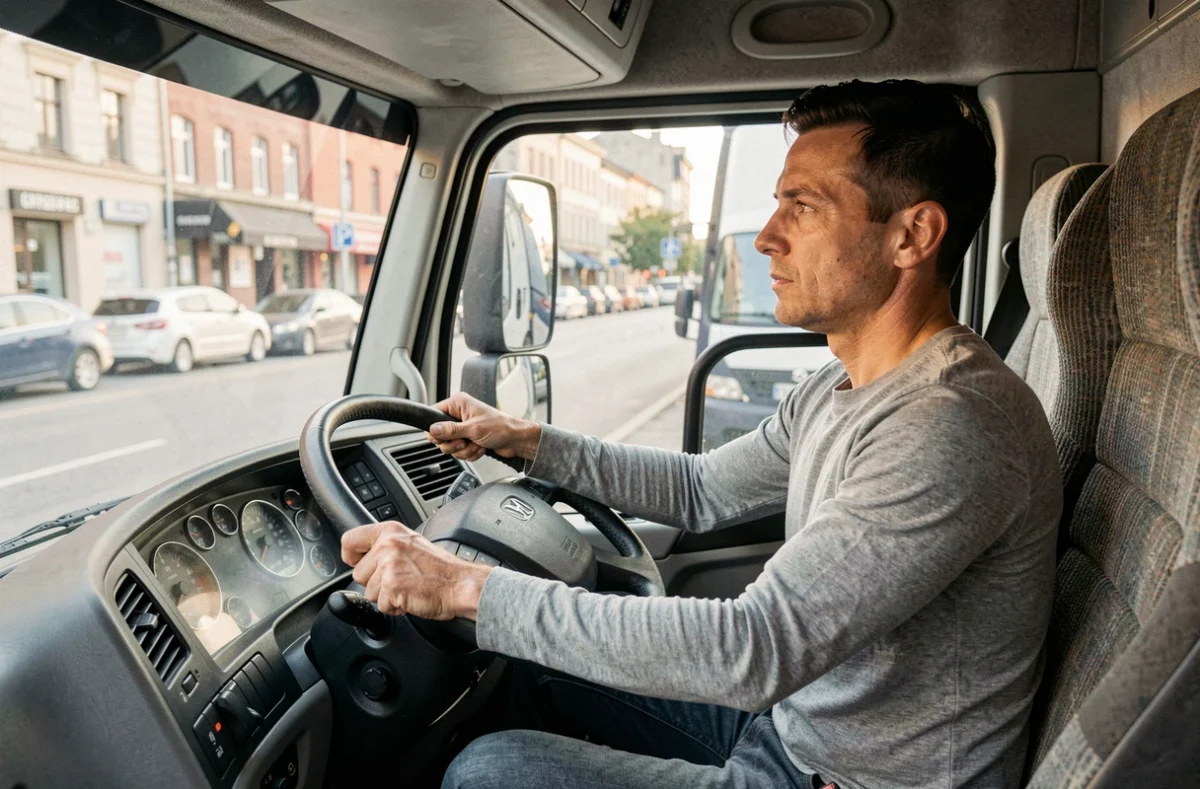
A 15 m³ truck is often more than six metres long, weighs several tonnes when loaded and has no interior rear-view mirror. Its size, braking and weight distribution all require a very different approach from driving a car. What are the practical differences between driving a van and a passenger car, and what should you pay particular attention to?
15 m³ truck vs. car: key driving differences at a glance
Before getting behind the wheel, comparing the specifications of a 15 m³ van with those of a saloon car helps show just how much you need to adapt your driving.
| Feature | Car (saloon) | 15 m³ truck (loaded) |
|---|---|---|
| Length | About 4.5 m | About 6 to 6.5 m |
| Height | About 1.5 m | About 2.5 to 3 m |
| Interior rear-view mirror | Yes | Not fitted on most models |
| Braking distance (at 90 km/h on a dry road) | Short | Considerably longer (due to the greater weight) |
| Sensitivity to crosswinds | Low | High (large side surface area) |
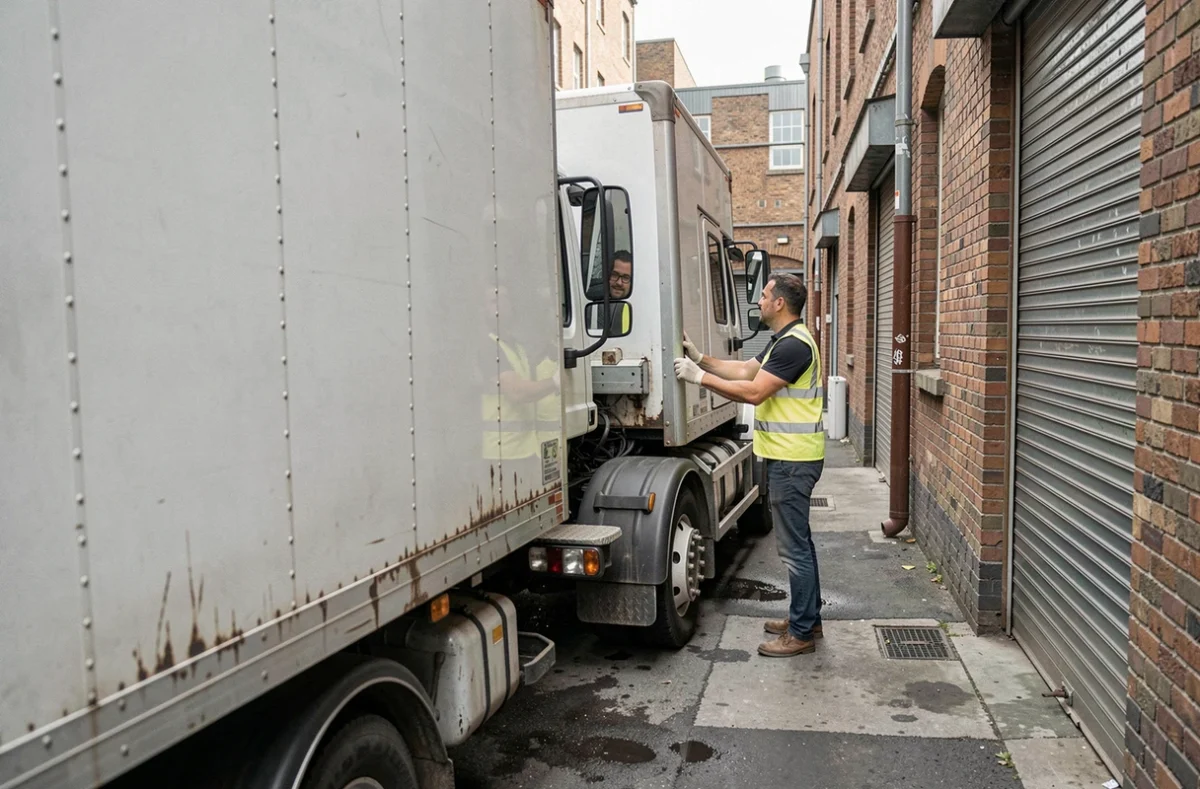
| Blind spots | Limited | Extensive on the sides and at the rear |
The extra height means checking every bridge, low-hanging branch and underground car park before driving through. The added length affects the turning radius and the path the truck takes around corners. With no interior rear-view mirror, you rely entirely on the two exterior mirrors, which should be adjusted carefully before setting off.
To learn the right techniques, it’s worth finding out how to drive a 15 m³ truck safely before you even turn the ignition key.

Gross vehicle weight and payload for a 15 m³ van: what the volume doesn’t tell you
The 15 m³ figure describes the cargo space, not the permitted weight. The gross vehicle weight rating (GVWR) shown on the registration document sets the legal limit, while payload is the difference between the GVWR and the vehicle’s unladen weight. Two 15 m³ trucks from different manufacturers can have very different payload capacities.
Exceeding the GVWR compromises braking, accelerates tyre wear and can result in a fine. When renting, ask the rental company for the exact payload capacity and, if necessary, weigh the load. This is the only reliable way to stay within the legal limit.
Distributing weight in the truck: keep it low
Place the heaviest items on the floor, in the centre of the load area, as close to the rear axle as possible. Stacking heavy items high or loading them all on one side shifts the centre of gravity and makes the vehicle unstable when cornering or braking hard.
- Secure furniture and bulky boxes against the front wall of the cargo area to stop them sliding towards the cab if you brake suddenly.
- Use ratchet straps attached to the truck’s anchor points to secure each layer of the load.
- Keep the tail lift clear so you can check the load restraints at every stop.
Low-emission zones and Crit’Air stickers: a pitfall when renting a van
Most competitors cover driving and loading but overlook a regulatory obstacle that can disrupt an entire journey. Low-emission zones (ZFE) vary from one metropolitan area to another: each local authority sets its own boundaries, operating hours and permitted Crit’Air stickers.
A rental truck isn’t necessarily new. Its Crit’Air classification depends on its first registration date and engine type. Before booking, check the vehicle’s sticker on the official website certificat-air.gouv.fr and compare it with the restrictions in every zone on your route. This can help you avoid an unpleasant surprise on moving day.
Plan your route around restrictions
A typical route may pass through two or three different ZFEs, each with its own rules. Temporary restrictions may also be introduced during periods of high pollution, making a zone that is usually open inaccessible.
- Check the current municipal or metropolitan regulations for every town on your route.
- Plan an alternative route around the most restrictive zones if the truck has a high Crit’Air rating.
- Ask the rental company for the exact Crit’Air classification of the vehicle you’ll be given, not just the model you booked.
Braking and safe following distances in a loaded truck
A 15 m³ van loaded to capacity takes much longer to stop than a car. Braking distance increases in proportion to the vehicle’s weight, and the lack of ABS on some older models makes things even more difficult on wet roads.
On the motorway, leaving at least three seconds between you and the vehicle ahead gives you a realistic safety margin. In built-up areas, anticipate traffic lights and slow down gradually to protect both the load and your passengers: sudden braking can send unsecured items sliding towards the front of the cargo area.
Speed and crosswinds: two factors that go hand in hand
The broad side of a 15 m³ truck catches the wind like a sail. On a bridge or when exiting a tunnel, a crosswind gust can push the vehicle half a lane sideways. Reducing your speed by a few km/h in these exposed areas is often enough to maintain a stable course.
In France, the speed limits for vans are the same as those for passenger cars as long as the GVWR is under 3.5 tonnes, which applies to most 15 m³ trucks rented with a category B licence. Check this information in the rental agreement to avoid any uncertainty.
Driving a 15 m³ truck comes down to three things that its volume alone doesn’t reveal: the vehicle’s actual weight when loaded, the lack of direct rear visibility and the regulations governing ZFEs. Checking the GVWR, adjusting the exterior mirrors and confirming the Crit’Air sticker before setting off covers most of the risks that many drivers discover too late—once they’re already on the road.