
The parental mental load cannot be solved with a list of generic tips. It is reduced through structural decisions about time, domestic space, and task distribution. Here, we discuss the concrete levers that mainstream content overlooks, particularly the management of over-control of routines, targeted delegation, and intentionally unprogrammed time slots.
Over-control of family routines: when organization becomes the problem
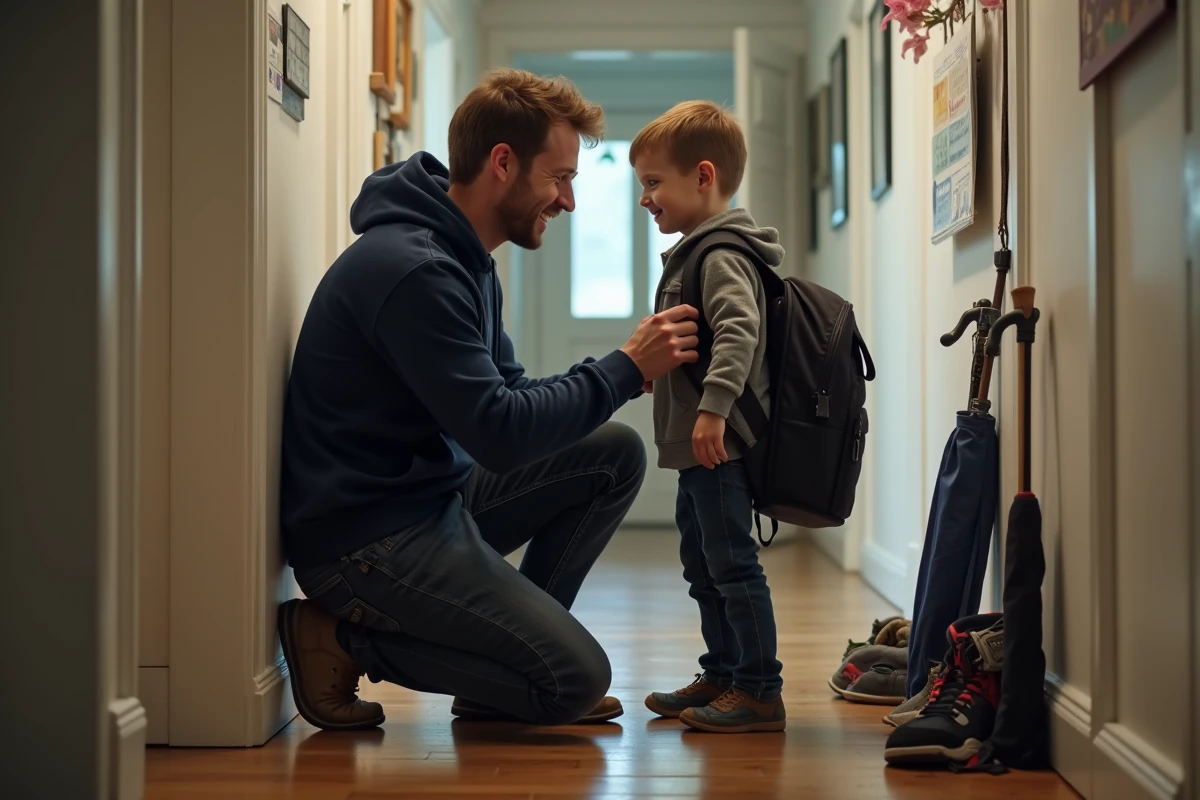
A morning or evening routine that is too rigid ultimately generates more stress than it absorbs. The parent who times each step (breakfast, teeth brushing, getting dressed, checking the school bag) turns daily life into a production line. Over-controlling routines amplifies the mental load instead of reducing it.
We recommend distinguishing fixed-sequence routines from result-oriented routines. The fixed sequence is suitable for children under six: the order of steps serves as a guide. For older children, switch to a result-oriented logic. The child knows what needs to be done before leaving; the order is theirs to decide.
If you are looking for feedback on these daily adjustments, the parents’ page of Maman Double compiles concrete testimonials from families that have re-evaluated their functioning.
Reducing the number of active routines also helps. Three well-maintained routines (morning, after school, bedtime) are sufficient. Multiplying micro-routines (school bag routine, snack routine, Wednesday routine) fragments parental attention without measurable benefit for the child.
Unprogrammed time slots during the week: an underestimated anti-stress lever
Blocking time without planned activities reduces the pressure of the family schedule. The classic temptation is to fill every free slot with sports, music lessons, or educational outings. The result: a family that is constantly on the run and parents who spend their weekends driving between activities.
Reserve at least one time slot per week (half a day or evening) where nothing is planned. Not a surprise activity, not a catch-up on household chores: a real gap in the agenda. These moments of floating allow for spontaneous family interactions, often more constructive than orchestrated outings.
How to protect these time slots
Mark them in the shared calendar as an appointment. An unprogrammed time slot that is not formalized will be absorbed by the first request that comes along. Treat it with the same rigidity as a medical appointment.
For families with multiple children in different activities, one common empty slot for the whole family is better than three individual scattered slots. This sometimes means eliminating an extracurricular activity. It’s a tough decision, but the gain in family cohesion is tangible.
Targeted delegation of household tasks: beyond sharing between couples
Articles on parental organization often discuss the distribution of tasks between partners. We observe that the real time gain comes from occasional delegation outside the home, for specific tasks.
- Ironing and laundry maintenance represent a disproportionate amount of time compared to their complexity. Outsourcing this task, even every other week, frees up several hours of mental availability.
- Grocery delivery with a pre-registered list eliminates travel time and wandering in the aisles. The gain is not just in hours: removing the decision “what are we eating” reduces daily decision fatigue.
- Deep cleaning (windows, floors, bathrooms) once or twice a month by a service provider allows for limiting regular maintenance to tidying up and essentials.
This approach has a cost. But it is a trade-off: the price of one hour of delegated cleaning versus one hour of parental availability or rest. For parents in a state of chronic fatigue, this calculation clearly favors delegation.

Blended families: the logistical trade-offs that no one details
Co-parenting in blended families adds a layer of logistical complexity that is rarely addressed. Two households mean two sets of clothing, two sets of school supplies, and two different rhythms.
The temptation to harmonize everything between the two homes is counterproductive. Each household has its own constraints of space, budget, and functioning. We recommend focusing on three points of convergence:
- A unique shared calendar (family agenda app) accessible to both households, updated in real-time, including medical appointments and school events.
- A transition bag containing non-duplicable items (comfort object, dental appliance, ongoing medication). This bag accompanies the child and never stays in just one household.
- Aligned bedtime and screen time rules between the two homes. Children can adapt to different environments, but sleep and stimulation markers must remain consistent for their balance.
Budget and duplicate clothing
Duplicating everyday clothing between the two households avoids forgetfulness and tensions. This does not concern the entire wardrobe, but the basics: underwear, pajamas, sports outfits. A minimal stock in each home eliminates the logistics of the clothing bag and reduces a frequent source of friction between co-parents.
The cost of this duplication is offset by the near-total disappearance of emergency trips to retrieve a forgotten coat or shoes.
Parental effectiveness is not measured by the number of routines in place or the perfection of the organization. It lies in the ability to choose what deserves energy and to let go of the rest. Removing an activity, delegating a task, leaving a time slot empty: these decisions require more courage than adding a line to the schedule.