
In the culinary world, coconut milk is often a key ingredient for many exotic dishes and delicious desserts. Like all food products, coconut milk can deteriorate and become unfit for consumption. Therefore, it is essential for cooking enthusiasts and professionals to know how to recognize the signs that indicate this product has spoiled. Vigilance regarding smell, texture, and color can prevent many inconveniences. Identifying these warning signs can not only ensure the quality and taste of dishes but also protect the health of consumers.
Recognizing the Warning Signs of Spoiled Coconut Milk
Coconut milk, a prized ingredient in many cuisines around the world, can unfortunately become a source of health problems if consumed when spoiled. The informed consumer must be able to detect the telltale signs of expired coconut milk. Pay attention to the texture: good coconut milk should be creamy and homogeneous. Any visible separation or presence of lumps could indicate a deterioration of the product.
The sense of smell is a critical factor in identifying expired coconut milk: health risks are often preceded by an unusual odor. While coconut milk may not emit a very strong smell when slightly expired, a sour or moldy scent is a significant warning sign. Consider this sign as an invitation to exercise caution and discard the suspicious product.
Taste, finally, is the ultimate judge of the quality of coconut milk. If, during a careful tasting, you detect a rancid, sour, or simply abnormal flavor, it is imperative not to consume the product. An altered taste is often synonymous with advanced spoilage, and therein lies a potential danger to your well-being. Therefore, be thorough in examining these characteristics before using coconut milk in your cooking.
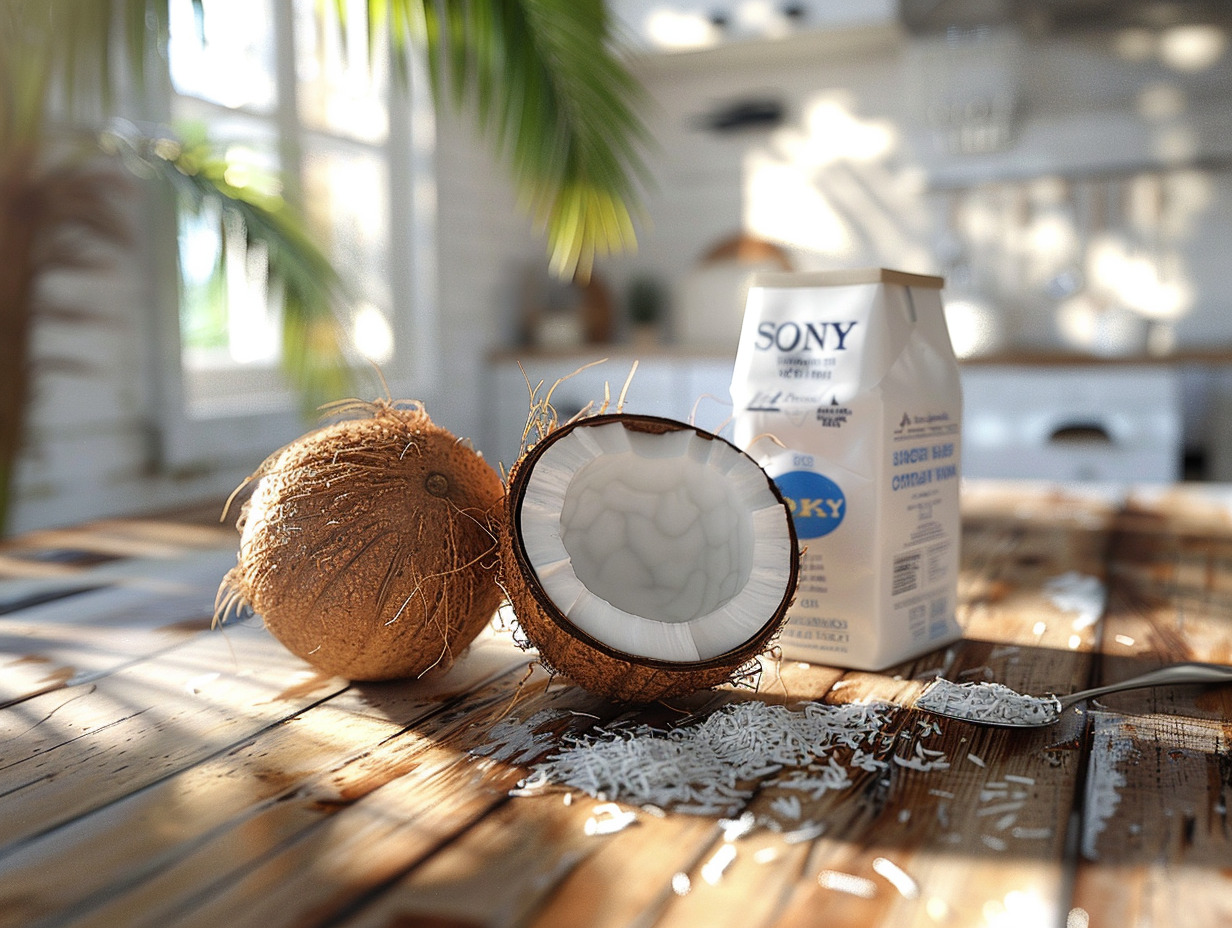
Tips to Avoid Consuming Spoiled Coconut Milk
Proper storage of coconut milk is key to preventing its degradation. Once opened, coconut milk should be transferred to an airtight container and stored in the refrigerator. Follow this guideline and ensure to consume the milk within two to three days to avoid any risk. The refrigerator’s freshness helps slow down bacterial proliferation, the enemy of milk quality.
For those considering longer-term storage, the freezer is a viable solution. Coconut milk can be frozen, ideally in individual portions for easier future use. This method extends the product’s shelf life while preserving its nutritional and taste qualities.
As for the fresh coconut, coconut water should be consumed quickly after opening and stored in the refrigerator if necessary. The flesh of the coconut, on the other hand, should be used as soon as possible or frozen to ensure its freshness and prevent food waste.
If, despite all precautions, the coconut milk turns out to be spoiled, consider eco-friendly alternatives to avoid wasting it. Expired coconut milk can find a second life in making handmade soaps or be diluted as fertilizer for plants. Add it to your compost to enrich your garden soil with essential nutrients. These responsible practices allow for the valorization of products beyond their initial consumption cycle.