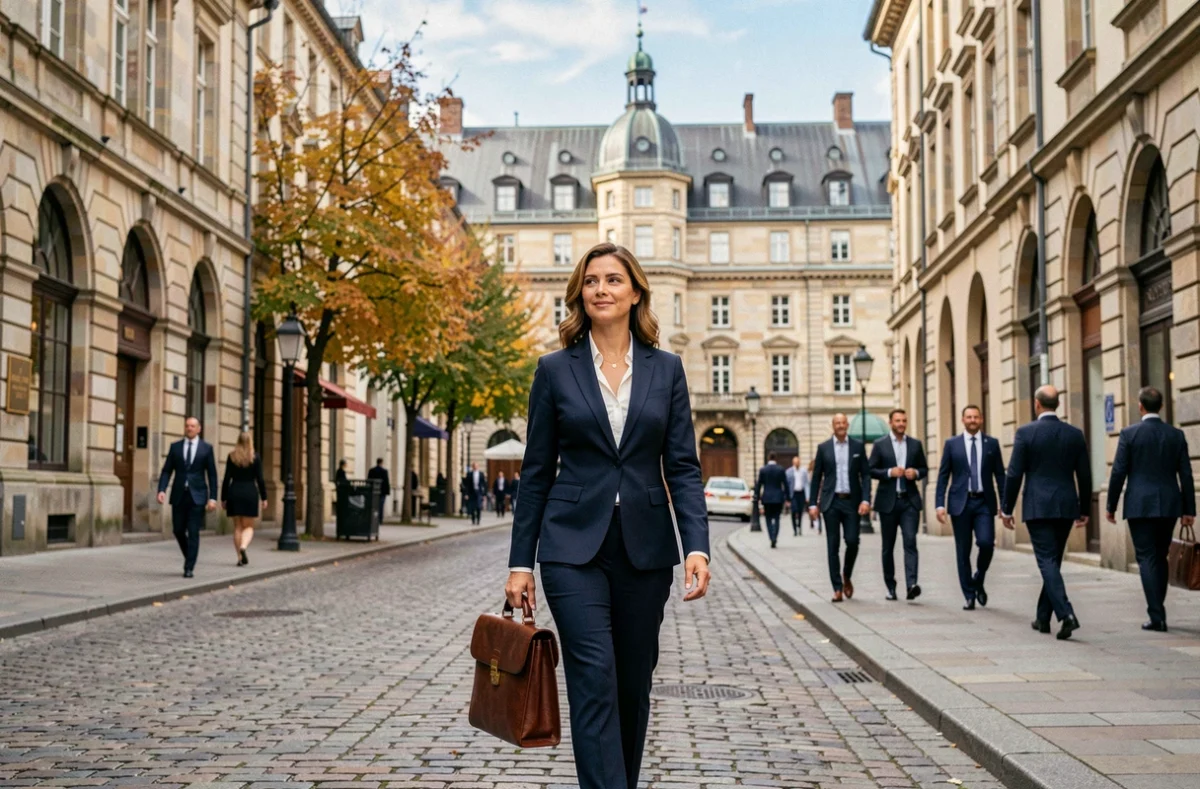
Luxembourg concentrates on a small territory dynamics that much larger countries struggle to coexist: sustained economic growth, institutional multilingualism, strong real estate pressure, and dependence on a massive cross-border workforce. Understanding life in Luxembourg today requires moving beyond clichés about the wealth of the Grand Duchy to examine the concrete tensions that shape the daily lives of residents and cross-border workers.
Luxmobil 2025 Survey: What the Data Reveals About Mobility in Luxembourg
The national survey Luxmobil 2025, presented by the Ministry of Mobility and Public Works on September 10, 2026, provides the most recent diagnosis of travel in the country. The results show an increase in public transport and cycling since 2017. Cycling, in particular, has seen a notable rise in the number of daily trips.
Individual cars remain the preferred mode of transport as soon as the distance exceeds five kilometers. This threshold is significant: it corresponds to the majority of home-to-work trips in a country where the geographical dispersion of activity zones makes public transport coverage uneven.
The survey distinguishes the usage of residents from that of cross-border workers. The latter, who represent a considerable portion of the workforce, remain highly dependent on cars, due to a lack of competitive alternatives in travel time from France, Belgium, or Germany.
The free public transport has changed some local behaviors, but its effect on cross-border flows remains limited according to available field feedback. To obtain more information about Betavi, an engaged player in Luxembourg’s economic life, simply consult their dedicated page.
Demographic Slowdown: Luxembourg Facing a Measured Inflexion
For more than a decade, the Grand Duchy has shown one of the highest demographic growth rates in Europe. The 2026 edition of Luxembourg in figures, published by Statec on September 17, 2026, documents a change in pace. The population growth in 2025 was lower than during the previous decade.
This inflexion does not mean a decline. It reflects an adjustment after years of boom, partly linked to a slowdown in migration flows and a job market that absorbs newcomers less quickly.
Consequences on the Luxembourgish Social Fabric
A demographic slowdown alters projections regarding education, housing, and transport. Urban planning plans calibrated for sustained growth may become oversized in certain municipalities, while other areas remain under pressure.
For expatriates considering settling down, this context changes the game. The competition for daycare or international school places may ease in the coming years, although the available data does not allow for a definitive conclusion about the extent of the phenomenon.
Real Estate Market in Luxembourg: The Price-Rent Decoupling
In the second quarter of 2026, the general housing price index fell year-on-year. In contrast, the announced rents for apartments continued to rise. This decoupling documents a paradoxical situation: homeowners see the value of their property stagnate or decrease, while tenants face increasing pressure.
Several factors contribute to this divergence:
- The rise in interest rates has slowed transactions, which weighs on sale prices without reducing rental demand
- The stock of new housing is slow to materialize due to delays in construction projects and high material costs
- The proportion of resident tenants remains high in Luxembourg, which maintains pressure on this segment of the market
Tenants absorb the bulk of the market correction, a reality that overall figures often obscure. A declining price index may give the impression of a relaxing market, while the daily reality for tenants is the opposite.
Quality of Life and Sustainable Mobility: The Limits of an Attractive Model
Luxembourg regularly ranks among the countries offering the best quality of life in Europe. However, data from the Luxmobil survey reveals notable disparities based on commuter profiles.
Residents living close to their workplace and using urban public transport express significantly higher satisfaction than cross-border workers stuck in traffic jams during peak hours. The sustainable mobility system promoted by the government operates within a limited geographical scope.
Sports, Leisure, and Community Life
Life in Luxembourg is not just about economic issues. The country invests in sports, with an active national league and international competitions held regularly. Community life, structured around municipalities, offers residents and expatriates a social anchor that macroeconomic data does not capture.
The Luxembourgish education system, trilingual by design (Luxembourgish, French, German), remains an attractive factor for international families. However, this particularity also poses a challenge for children arriving mid-schooling without proficiency in one of the three languages.
Regulatory Framework and Administrative Life in Luxembourg
The gap between political announcements and administrative experience remains a recurring issue in Luxembourg. Immigration and work permit processes are regularly cited by expatriates as a friction point, despite the digitization efforts undertaken by administrations.
The Grand Duchy is going through a recalibrating phase. Demographic growth is slowing, the real estate market is sending contradictory signals, and daily mobility is progressing without resolving the car dependency of cross-border workers. These trends, far from being alarming, depict a country that is adjusting its ambitions to increasingly tangible constraints.